15 Critical Factors Driving AI Agents for Data Analysis Success
The enterprise data analytics landscape has undergone a fundamental transformation as organizations struggle with unprecedented data volumes and complexity. Data teams at companies like IBM and Microsoft are no longer just managing ETL pipelines and building dashboards—they're orchestrating intelligent systems that can autonomously analyze, interpret, and act on data streams in real time. This shift represents a paradigm change from passive business intelligence tools to active analytical agents that augment human decision-making capabilities across every layer of the data stack.
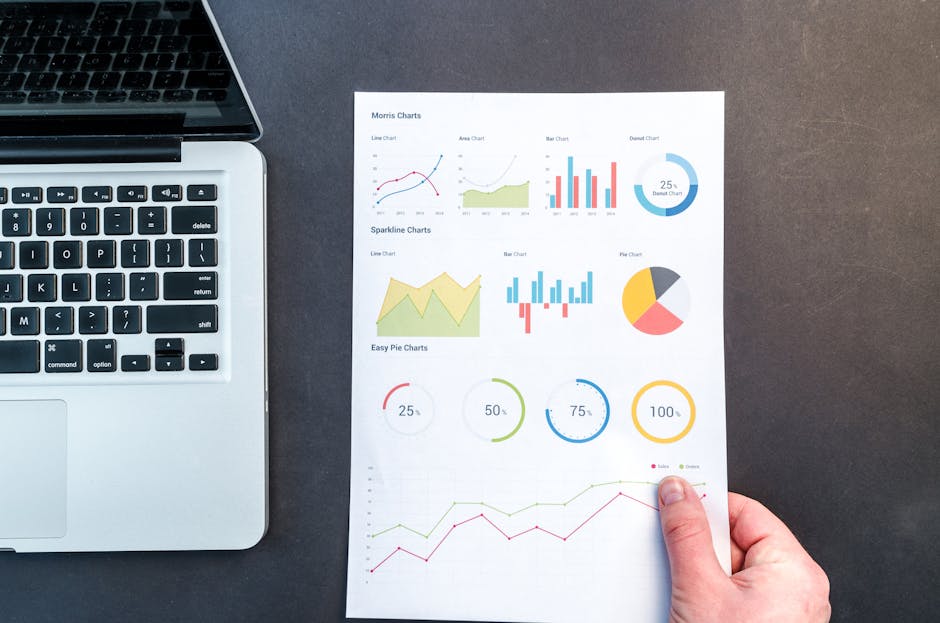
The emergence of AI Agents for Data Analysis addresses core pain points that have plagued data teams for years: the inability to extract actionable insights quickly enough from massive data lakes, the persistent data quality issues that undermine predictive modeling efforts, and the skills shortage that leaves advanced analytics capabilities underutilized. These autonomous agents don't just process data faster—they fundamentally change how data governance, data integration, and insight generation work in production environments. For teams running continuous data ingestion and preparation workflows, AI agents represent the difference between reactive reporting and proactive strategic intelligence.
Understanding the AI Agent Revolution in Data Analytics
Traditional business intelligence platforms require human analysts to formulate queries, design visualizations, and interpret results. AI Agents for Data Analysis invert this model by proactively monitoring data streams, identifying anomalies, surfacing patterns, and even recommending specific actions based on historical outcomes. In practice, this means a data governance team can deploy agents that continuously validate data provenance across distributed systems, flagging quality issues before they contaminate downstream analytics. The technology leverages natural language processing to translate business questions into complex analytical workflows, machine learning models to detect subtle correlations humans might miss, and automated decision support systems to route insights to the right stakeholders at the right time.
The practical impact becomes clear when you consider real-time data processing scenarios. An agent monitoring manufacturing sensor data doesn't just alert when thresholds are breached—it correlates anomalies across multiple data sources, references historical maintenance records, predicts failure probability, and automatically generates work orders. This level of autonomous operation was impossible with conventional BI tools that required manual query construction and interpretation. For data teams managing dozens of KPIs across siloed platforms, agents provide the connective intelligence that transforms fragmented metrics into coherent strategic narratives.
Factor 1: Autonomous Data Wrangling Capabilities
The first critical factor determining agent success is the ability to handle data wrangling without human intervention. In production environments, data arrives in inconsistent formats, with missing values, conflicting schemas, and varying levels of reliability. Advanced Analytics Solutions built around AI agents can automatically detect schema drift, impute missing values using contextual models, and reconcile conflicting records based on learned reliability scores. This eliminates the bottleneck where data scientists spend 60-80% of their time on preparation rather than analysis. Agents trained on your organization's specific data patterns learn to recognize valid versus erroneous data, apply appropriate transformations, and maintain detailed lineage logs for audit purposes.
Factor 2: Real-Time Anomaly Detection at Scale
AI Agents for Data Analysis excel at continuous monitoring across massive datasets, identifying deviations that signal either opportunities or risks. Unlike rule-based alerting systems that generate alert fatigue through false positives, agents use probabilistic models that understand normal variation patterns and only surface statistically significant anomalies. In financial services, this means detecting fraudulent transaction patterns across billions of events. In supply chain analytics, it means identifying disruption signals before they cascade into operational failures. The agent's ability to correlate anomalies across disparate data sources—combining transaction logs, social media sentiment, weather data, and supplier performance metrics—provides context that transforms raw alerts into actionable intelligence.
Factor 3: Natural Language Query Translation
Business stakeholders shouldn't need to master SQL or Python to extract insights from data lakes. The third factor is an agent's ability to accept natural language questions and translate them into appropriate analytical operations. When a marketing director asks "which customer segments showed declining engagement last quarter and what product features correlate with retention," the agent decomposes this into specific queries across customer databases, event logs, and product usage tables, performs the necessary joins and aggregations, and returns visualizations with statistical confidence intervals. This democratizes data access while maintaining analytical rigor, allowing domain experts to directly interrogate data without creating new workload for already-stretched data teams.
Factor 4: Automated Insight Generation and Distribution
Raw analysis has limited value if insights don't reach decision-makers when they're relevant. AI Agents for Data Analysis automatically generate narrative summaries of findings, contextualize them within business objectives, and route them through appropriate channels. An agent monitoring sales performance doesn't just produce a dashboard—it identifies that the Northeast region is underperforming on a specific product line, correlates this with recent pricing changes and competitive activity, and sends a structured brief to the regional sales director with recommended tactical adjustments. This transforms passive reporting into active intelligence delivery, ensuring that data insights drive timely action rather than accumulating in neglected dashboards.
Factor 5: Adaptive Learning from User Feedback
The most effective agents continuously improve through interaction with analysts and business users. When a data scientist adjusts an agent's classification threshold or corrects an automated interpretation, the system incorporates this feedback into its models. Over time, the agent learns your organization's specific definitions of customer churn, product quality, or market opportunity. This creates a virtuous cycle where the agent becomes progressively more aligned with organizational knowledge and priorities. In data governance contexts, agents learn which data quality rules matter most in practice versus theoretical compliance requirements, focusing remediation efforts where they drive actual business impact.
Factor 6: Integration with Existing Data Infrastructure
AI agents must operate within your current data ecosystem rather than requiring wholesale infrastructure replacement. The sixth factor is seamless integration with existing data warehouses, lakes, ETL pipelines, and BI platforms. Agents should connect to Tableau dashboards, Oracle databases, SAP systems, and cloud data platforms through standard APIs and connectors. This allows incremental adoption where agents augment existing workflows—automatically refreshing datasets, validating pipeline outputs, or enriching visualizations with predictive overlays—without disrupting production systems. Organizations running mature data stacks can't afford migration risks; successful agent deployments enhance rather than replace proven infrastructure.
Factor 7: Explainability and Transparency
Data teams and business stakeholders need to understand how agents reach conclusions, especially for decisions with significant consequences. The seventh critical factor is the agent's ability to explain its reasoning in accessible terms. When an agent recommends reallocating marketing budget based on predicted customer lifetime value, it should articulate which features drove the prediction, what historical patterns informed the model, and what confidence intervals apply to the forecast. This transparency builds trust and allows human oversight where judgment is required. In regulated industries, explainability isn't optional—auditors and compliance teams need clear documentation of how automated systems influence material business decisions.
Factor 8: Handling Multi-Modal Data Sources
Modern analytics extends beyond structured databases to include text, images, sensor streams, and unstructured content. AI Agents for Data Analysis that can only process tabular data miss critical context. The eighth factor is multi-modal capability—agents that analyze customer support transcripts for sentiment trends, process product images to detect quality defects, or interpret IoT sensor patterns to predict equipment failures. This comprehensive view transforms isolated data silos into integrated analytical frameworks. When evaluating supplier performance, an agent might combine structured procurement data with unstructured email communications, social media mentions, and shipping documentation to provide holistic risk assessment rather than narrow metric tracking.
Factor 9: Collaborative Workflow Integration
Data analysis rarely occurs in isolation. The ninth factor is how well agents integrate into collaborative workflows where multiple stakeholders contribute to analytical processes. Agents should support asynchronous collaboration where a business analyst initiates exploration, a data scientist refines the methodology, and executives review findings—all within a shared workspace that maintains context and version history. This matters particularly for complex analytical projects like building predictive models for demand forecasting, where domain knowledge, statistical expertise, and business strategy must converge. Agents facilitate this collaboration by maintaining detailed logs of analytical decisions, making assumptions explicit, and allowing stakeholders to replay and branch analytical workflows.
Factor 10: Scalability Across Data Volumes and Complexity
Analytics requirements grow faster than infrastructure budgets. The tenth factor is architectural scalability—agents that maintain performance as data volumes scale from gigabytes to petabytes and analytical complexity expands from simple aggregations to ensemble machine learning models. This requires distributed processing capabilities, intelligent query optimization, and progressive approximation strategies where agents provide rapid preliminary insights while refining results in the background. Organizations can't deploy agents that perform well in pilot projects but collapse under production data loads. Successful implementations leverage cloud-native architectures that elastically scale computational resources based on analytical workload demands.
Factor 11: Security and Access Control
AI agents operate with broad data access to perform cross-functional analysis, creating potential security risks. The eleventh factor is robust access control and audit logging. Agents must respect existing data governance policies, ensuring analysts can only access data permitted by their roles, sensitive information remains protected, and all queries are logged for compliance purposes. When an agent analyzes customer behavior patterns, it should automatically redact personally identifiable information for users without specific privacy clearances. In healthcare or financial contexts, this becomes critical—agents must enforce HIPAA or regulatory requirements even when correlating data across traditionally separated systems. Security can't be an afterthought; it must be architected into agent behavior from the beginning.
Factor 12: Predictive and Prescriptive Capabilities
Descriptive analytics—understanding what happened—provides limited competitive advantage. The twelfth factor is an agent's ability to move beyond description to prediction and prescription. Business Intelligence Automation powered by AI agents should forecast future trends based on historical patterns, simulate scenarios to evaluate strategic options, and recommend specific actions optimized for defined objectives. When analyzing inventory levels, an agent doesn't just report current stock—it predicts demand based on seasonal patterns and market indicators, prescribes optimal reorder quantities and timing, and highlights risks like supplier concentration or obsolescence exposure. This transforms analytics from historical reporting to forward-looking strategic support.
Factor 13: Continuous Model Monitoring and Retraining
Machine learning models degrade as data distributions shift and business conditions evolve. The thirteenth factor is automated model monitoring and retraining. Agents should continuously evaluate their predictive accuracy, detect when performance deteriorates, and trigger retraining workflows using recent data. A customer churn prediction model trained on pre-pandemic behavior patterns may fail as market dynamics change. Effective agents recognize this drift, alert data teams to the degradation, and propose updated models incorporating new behavioral patterns. This continuous improvement prevents the subtle erosion of analytical quality that occurs when models age unmonitored, ensuring insights remain reliable as business contexts evolve.
Factor 14: Cost Optimization and Resource Management
Running complex analytics at scale consumes significant computational resources. The fourteenth factor is the agent's ability to optimize resource utilization—caching frequently accessed results, prioritizing high-value queries, and leveraging cost-effective processing tiers for non-urgent analysis. When data teams manage cloud analytics platforms, compute costs can spiral if every exploratory query triggers full dataset scans. Intelligent agents use query planning to minimize resource consumption, execute similar queries in batches, and materialize commonly used aggregations. This financial efficiency makes advanced analytics economically sustainable even for organizations without unlimited budgets, democratizing capabilities previously accessible only to resource-rich enterprises.
Factor 15: Business Context Awareness
The final and perhaps most critical factor is the agent's understanding of business context. Technical accuracy means little if insights lack relevance to actual business objectives. Agents should understand your organization's strategic priorities, competitive landscape, operational constraints, and key performance drivers. When analyzing marketing campaign performance, an agent aware of brand positioning strategy interprets metrics differently than one focused purely on statistical optimization. This contextual intelligence comes from continuous interaction with business stakeholders, integration with strategic planning documents, and explicit encoding of business rules and priorities. AI Agents for Data Analysis become truly valuable when they transcend technical data processing to deliver insights aligned with what your organization actually needs to accomplish.
Addressing Implementation Challenges Through Strategic Development
Despite these compelling factors, deploying AI agents into production data environments presents real challenges. Data teams must navigate integration complexity, manage stakeholder expectations, address skills gaps, and demonstrate clear ROI. Success requires treating agent deployment not as a technology purchase but as a strategic initiative involving comprehensive solution development that accounts for organizational readiness, change management, and iterative refinement. The most effective implementations begin with narrowly scoped use cases that solve acute pain points—such as automating daily data quality checks or accelerating standard reporting workflows—then expand based on demonstrated value.
Organizations should also invest in upskilling existing data teams to work effectively alongside AI agents. This doesn't mean everyone becomes a machine learning expert, but analysts benefit from understanding agent capabilities and limitations, knowing when to trust automated insights versus applying human judgment, and developing skills in agent training and refinement. The goal is human-AI collaboration where agents handle repetitive analytical tasks and surface potential insights while experienced analysts provide context, validate findings, and make strategic interpretations. This partnership model amplifies rather than replaces human expertise.
Conclusion: From Data Overload to Strategic Intelligence
The fifteen factors outlined above provide a comprehensive framework for evaluating and implementing AI Agents for Data Analysis in enterprise environments. Organizations facing data overload, struggling with slow decision cycles, or unable to extract strategic value from their data investments should view these agents not as futuristic technology but as practical tools available today. The shift from traditional business intelligence to intelligent, autonomous analytics represents the next evolution in how data-driven organizations operate—moving from reactive reporting to proactive insight generation, from siloed metrics to integrated intelligence, and from analyst bottlenecks to democratized access. For data teams ready to move beyond conventional approaches, partnering with experts in AI Agent Development provides the strategic guidance and technical capabilities needed to transform raw data into sustainable competitive advantage.
Comments
Post a Comment