15 Critical Factors Shaping AI-Driven Mobility in Autonomous Vehicles
The automotive landscape is undergoing a transformation unlike anything we've witnessed since the introduction of the assembly line. As ADAS engineering teams push the boundaries of what's possible and V2X communication protocols mature, the convergence of artificial intelligence with vehicular technology is creating entirely new paradigms for how we think about transportation. From sensor fusion architectures that process terabytes of road data daily to edge computing systems enabling split-second decision-making, the infrastructure supporting autonomous mobility has evolved from experimental prototypes to production-ready platforms deployed across multiple OEMs.
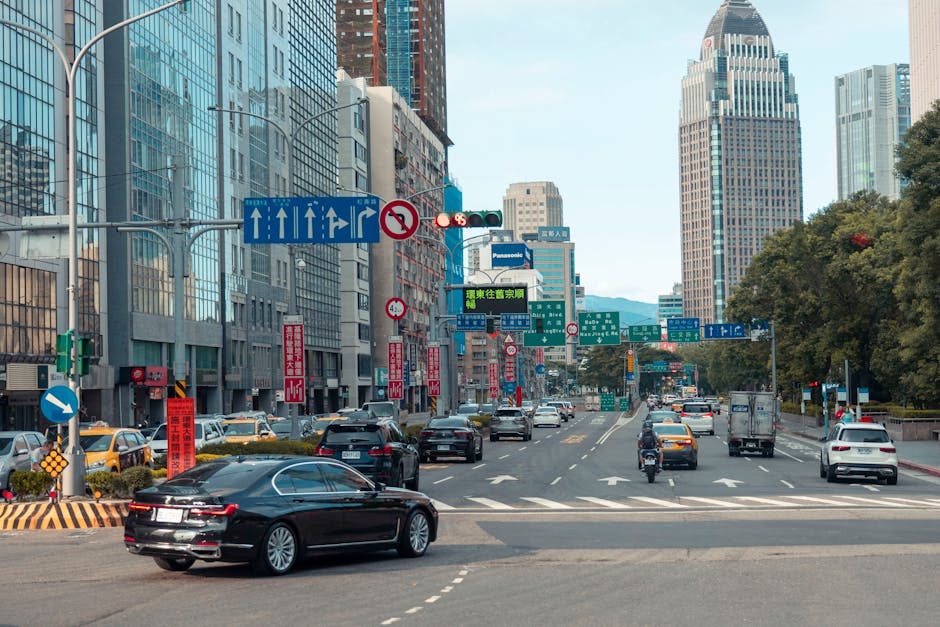
Understanding the forces driving this revolution requires looking beyond surface-level automation to examine the foundational elements that make AI-Driven Mobility viable at scale. Tesla's approach to fleet learning, Waymo's meticulous mapping methodologies, and GM's Cruise division's urban deployment strategies each illuminate different aspects of how machine learning integrates with mechanical systems. What follows is a comprehensive examination of the fifteen factors that practitioners inside autonomous systems integration teams consider foundational to delivering safe, reliable, and commercially viable intelligent transportation solutions.
1. Sensor Fusion AI Architecture Quality
At the heart of every autonomous vehicle lies a sensor fusion system that must reconcile data from LIDAR arrays, radar units, camera feeds, ultrasonic sensors, and GPS positioning into a coherent environmental model. The quality of Sensor Fusion AI directly determines how accurately a vehicle perceives its surroundings. Tesla's vision-based approach prioritizes camera data with neural network processing, while Waymo employs redundant LIDAR systems for millimeter-precision mapping. The algorithmic frameworks that weight conflicting sensor inputs—deciding whether to trust radar's velocity reading over LIDAR's distance measurement during heavy rain, for instance—represent some of the most sophisticated real-time inference pipelines in production AI today.
Our validation teams run millions of simulated scenarios testing edge cases where sensor disagreement occurs: a motorcycle partially obscured by a truck, pedestrians emerging from behind parked vehicles, or debris that reflects radar signatures inconsistently. The difference between a Level 2 system that requires driver monitoring and a Level 4 system capable of true autonomous operation often comes down to how gracefully the sensor fusion stack handles these ambiguities. Investment in custom AI solutions tailored to specific sensor configurations has become a competitive differentiator, with OEMs spending upward of $2 billion annually on proprietary fusion algorithms.
2. Real-Time Inference Performance at the Edge
Deploying neural networks that run efficiently on vehicular edge computing hardware presents challenges distinct from cloud-based AI. Latency budgets measured in single-digit milliseconds mean that autonomous systems integration cannot rely on round-trip communication to data centers. Modern vehicles employ specialized AI accelerators—NVIDIA's DRIVE platform, Qualcomm's Snapdragon Ride, or Tesla's custom FSD chip—capable of executing trillions of operations per second while operating within automotive temperature ranges and power constraints.
The optimization work required to compress a 500-layer convolutional network trained on cloud infrastructure into a quantized model that fits within 12GB of onboard memory while maintaining inference speeds above 30fps involves techniques like pruning, knowledge distillation, and INT8 quantization. BMW's autonomous driving engineers have documented achieving 40% latency reductions through hardware-software co-design, where neural network architectures are modified to align with specific accelerator instruction sets. This factor directly impacts the refresh rate of planning algorithms and ultimately determines minimum safe operating speeds for autonomous features.
3. Training Data Diversity and Volume
Machine learning model training for driver behavior prediction and environmental understanding requires petabyte-scale datasets capturing every conceivable driving scenario. Tesla's fleet of over four million vehicles equipped with cameras provides continuous data collection from real-world driving, creating a feedback loop where edge cases encountered by any vehicle become training examples for the entire fleet. This data moat represents a structural advantage that newer entrants struggle to replicate.
However, raw volume alone proves insufficient—geographic diversity matters immensely. A model trained exclusively on California highways fails catastrophically when encountering Boston's unmarked rotaries or Mumbai's mixed traffic patterns. Ford's autonomous division maintains dedicated data collection vehicles operating in twelve countries specifically to capture regional driving norms, road infrastructure variations, and weather patterns. The labeling pipeline that annotates this data—identifying pedestrians, categorizing vehicle types, marking lane boundaries—employs thousands of specialists and increasingly relies on semi-supervised learning to reduce manual annotation costs.
4. OTA Update Infrastructure Reliability
Software update deployment for connected vehicles must balance rapid iteration with absolute reliability. Unlike smartphone apps where a buggy update causes minor inconvenience, flawed autonomous driving software can have life-safety implications. The OTA infrastructure supporting AI-Driven Mobility requires cryptographic signing, rollback capabilities, staged rollouts with fleet segmentation, and comprehensive pre-deployment simulation testing.
Tesla's approach of pushing updates to small beta fleets before wider release exemplifies industry best practices, though even this methodology has faced scrutiny when updates altered driving behavior unexpectedly. GM's strategy involves longer validation cycles with more conservative feature releases. The technical architecture must handle partial updates—replacing neural network weights without full system reflashing—while maintaining version compatibility across hardware generations spanning five model years. Managing this complexity while enabling continuous improvement represents a critical operational capability.
5. Regulatory Compliance and Safety Validation Frameworks
NHTSA standards for autonomous systems remain evolving, but the validation burden falls on manufacturers to demonstrate safety through both simulation and real-world testing. Autonomous vehicle testing and validation now encompasses scenarios numbering in the hundreds of millions, covering everything from standard lane-keeping to extreme edge cases like animals crossing highways or debris falling from overpasses.
Waymo's approach of driving over 20 million autonomous miles on public roads while simultaneously running billions of simulated miles demonstrates the scale of validation required before commercial deployment. The documentation requirements alone—proving that safety-critical systems behave correctly under all specified conditions—involve test matrices that would be impossible to execute without AI-driven test case generation and automated scenario synthesis. This factor disproportionately affects smaller players who lack the resources for comprehensive validation programs.
6. Cybersecurity Architecture for Connected Systems
Managing cybersecurity risks in connected vehicles represents an ongoing challenge as attack surfaces expand with every new wireless interface. Vehicle telematics systems, smartphone connectivity, V2X communication protocols, and OTA update channels each present potential vulnerabilities. A successful intrusion targeting autonomous driving systems could theoretically allow remote manipulation of steering or braking—a scenario that keeps security teams at every OEM working overtime.
Modern automotive cybersecurity employs defense-in-depth strategies: hardware security modules for cryptographic operations, isolated processing domains separating safety-critical from infotainment systems, intrusion detection monitoring CAN bus traffic for anomalies, and secure boot chains preventing unauthorized software execution. BMW and Ford both maintain dedicated cybersecurity response teams conducting penetration testing against their own systems, while industry-wide information sharing through Auto-ISAC helps disseminate threat intelligence across manufacturers.
7. HD Mapping Precision and Freshness
Road mapping for autonomous systems requires centimeter-level accuracy and near-real-time updates as infrastructure changes. Construction zones, temporary lane closures, new traffic signals, and even pothole formations can render maps outdated, forcing autonomous systems to operate in degraded modes or disengage entirely. Waymo's mapping vehicles continuously resurvey operational areas, while Tesla's approach leverages fleet data to crowd-source map updates.
The computational challenge involves reconciling potentially conflicting observations from thousands of vehicles, determining when a reported change represents a genuine infrastructure modification versus a sensor anomaly, and propagating validated updates to the fleet within hours. Some OEMs maintain separate teams for map creation versus map maintenance, with the latter representing an ongoing operational expense that scales with deployment geography. The precision required—distinguishing between lanes separated by mere feet—demands LIDAR or vision systems far exceeding GPS accuracy alone.
8. AI-Driven Predictive Maintenance Systems
Predictive maintenance using AI extends beyond traditional diagnostics to anticipate component failures before they impact autonomous system reliability. When sensor degradation might compromise safety, predictive models analyzing performance metrics over time can schedule preventive service. Camera lens contamination, LIDAR alignment drift, radar calibration errors—all must be detected and addressed proactively.
Tesla's service centers receive alerts when vehicle data indicates declining sensor performance, often scheduling maintenance before drivers notice issues. Ford's connected vehicle analytics process signals from millions of vehicles to identify failure patterns, updating maintenance schedules dynamically. These systems exemplify how AI-Driven Mobility extends beyond the driving task itself to encompass the entire vehicle lifecycle, ensuring that the sensors and computers enabling autonomy remain within specification throughout the ownership period.
9. Autonomous Systems Integration with Legacy Platforms
Integration of legacy systems with new technologies presents particular challenges for established automakers. Autonomous Systems Integration must interface with powertrain control modules, stability control systems, and steering actuators originally designed for human drivers. The software abstraction layers that allow AI planning algorithms to command these mechanical systems involve extensive validation to ensure fail-safe behavior.
GM's approach with the Ultium platform involved designing new electrical architectures specifically to support autonomous features, while Ford has retrofitted autonomous capabilities onto existing vehicle platforms. The trade-offs involve development speed versus optimization—purpose-built platforms offer cleaner integration but require longer development cycles and higher tooling investments. The middleware layers that translate high-level autonomous commands into low-level actuator controls represent critical intellectual property, with some OEMs licensing these components rather than developing in-house.
10. Customer Experience Personalization Through AI
Customer experience personalization in autonomous vehicles extends beyond traditional infotainment to encompass routing preferences, driving style parameters, and predictive destination suggestions. Machine learning models that understand individual preferences—this user prefers highways even if slightly longer, that user prioritizes shortest time regardless of road type—create differentiated experiences that build brand loyalty.
Tesla's profiles save seat positions, climate preferences, and Autopilot aggressiveness settings per driver. Future systems may adjust autonomous driving characteristics based on passenger comfort feedback, routing around areas that previously caused motion sickness or selecting smoother roads when elderly passengers are detected. The data pipeline supporting these features must respect privacy regulations while extracting maximum value from behavioral data, presenting both technical and policy challenges.
11. Supply Chain Optimization for EV and Autonomous Components
Supply chain optimization for EV components and autonomous hardware requires unprecedented coordination as semiconductor shortages and battery material constraints impact production. AI-driven procurement systems forecast component availability months in advance, dynamically adjusting production schedules and identifying alternative suppliers when primary sources face disruptions.
Ford's use of machine learning to predict chip shortage impacts allowed earlier mitigation than competitors, while Tesla's vertical integration strategy reducing dependency on external suppliers demonstrates alternative approaches to supply chain resilience. The computational complexity of optimizing multi-tier supply networks with thousands of components, each with lead times measured in months, has made AI indispensable for production planning in modern automotive manufacturing.
12. Real-Time Traffic Data Analytics and Route Optimization
Real-time traffic data analytics power route optimization that considers not just current conditions but predicted congestion based on historical patterns, event schedules, and weather forecasts. Autonomous vehicles can leverage this intelligence more effectively than human drivers, automatically rerouting to avoid developing slowdowns before they become visible to other traffic.
The data fusion problem involves integrating municipal traffic sensor data, anonymized location data from connected vehicles, historical traffic patterns, and special event information into cohesive traffic models updated every few minutes. Companies like Waymo use these models both for immediate routing decisions and to inform where autonomous taxi services should preposition vehicles to meet anticipated demand—a MaaS optimization problem with significant revenue implications.
13. Digital Twin Development for Simulation
Digital twin development creates virtual replicas of vehicles, sensors, and entire urban environments where millions of test scenarios execute in accelerated time. These simulation platforms validate software updates, test new neural network architectures, and explore edge cases too dangerous or rare to encounter through road testing alone.
The fidelity required—accurately modeling how raindrops distort camera images or how metallic paint affects LIDAR returns—demands physics-based rendering combined with empirical data from real-world sensors. BMW's virtual testing platform can simulate an entire day of urban driving in under an hour, compressing months of validation into weeks. As AI models grow more complex, simulation infrastructure becomes the bottleneck determining how quickly autonomous capabilities can advance.
14. Human-Machine Interface Design for Trust Building
Building consumer trust and adoption of autonomous features requires interface design that communicates system state, limitations, and intentions clearly. Visual displays showing what the vehicle perceives, auditory cues indicating mode transitions, and haptic feedback through the steering wheel all contribute to driver confidence in autonomous systems.
Ford's research into interface design revealed that showing too much sensor data overwhelms users while showing too little undermines trust. The optimal balance involves abstract representations—highlighting detected vehicles and pedestrians without displaying raw LIDAR point clouds. As systems progress toward higher autonomy levels, these interfaces must transition from monitoring aids to passenger information systems, explaining routing decisions and estimated arrival times rather than demanding driver attention.
15. Cross-Domain AI Talent Acquisition and Retention
Competitive pressure from tech-savvy entrants has intensified competition for engineers skilled in machine learning, robotics, and autonomous systems. Traditional automotive companies compete with Silicon Valley compensation packages to attract talent from computer science rather than mechanical engineering backgrounds. The cultural integration of software-centric development methodologies into hardware-focused automotive organizations represents a management challenge as significant as the technical work itself.
Companies establishing AI research labs in tech hubs—GM Cruise in San Francisco, Ford's Greenfield Labs, BMW's Mountain View office—acknowledge that talent won't relocate to Detroit or Munich. The organizational transformations required to support rapid software iteration, continuous integration pipelines, and data-driven decision making represent departure from traditional automotive development cycles measured in years rather than weeks.
Conclusion
These fifteen factors collectively determine which organizations will lead the AI-Driven Mobility transformation and which will struggle to remain relevant as software subsumes mechanical engineering as the primary differentiator in automotive products. The high R&D costs for AI development—often exceeding $1 billion annually at leading OEMs—create barriers to entry that favor established players and well-funded startups over smaller manufacturers. Yet the pace of innovation remains sufficiently rapid that positions can shift quickly, particularly as AI Agent Development platforms emerge to commoditize capabilities that currently require proprietary development. Organizations that systematically address each of these factors while maintaining the organizational agility to adapt as technologies and regulations evolve position themselves to capture disproportionate value in the autonomous future. The winners will be those who recognize that autonomous vehicles represent not merely an incremental feature improvement but a fundamental reimagining of what automobiles are and how they integrate into urban transportation ecosystems.


Comments
Post a Comment