AI-Driven Predictive Maintenance: Data-Backed Insights on ROI and Performance
The industrial equipment manufacturing sector is experiencing a fundamental shift in how organizations approach asset reliability and maintenance operations. Traditional time-based and reactive maintenance strategies are giving way to sophisticated analytics-driven approaches that leverage machine learning algorithms to predict equipment failures before they occur. This transformation is not merely theoretical—extensive field data from manufacturing facilities worldwide demonstrates measurable improvements in asset availability, maintenance cost reduction, and operational uptime. For maintenance directors and reliability engineers, understanding the quantifiable impact of these technologies has become essential for justifying capital investments and strategic planning.
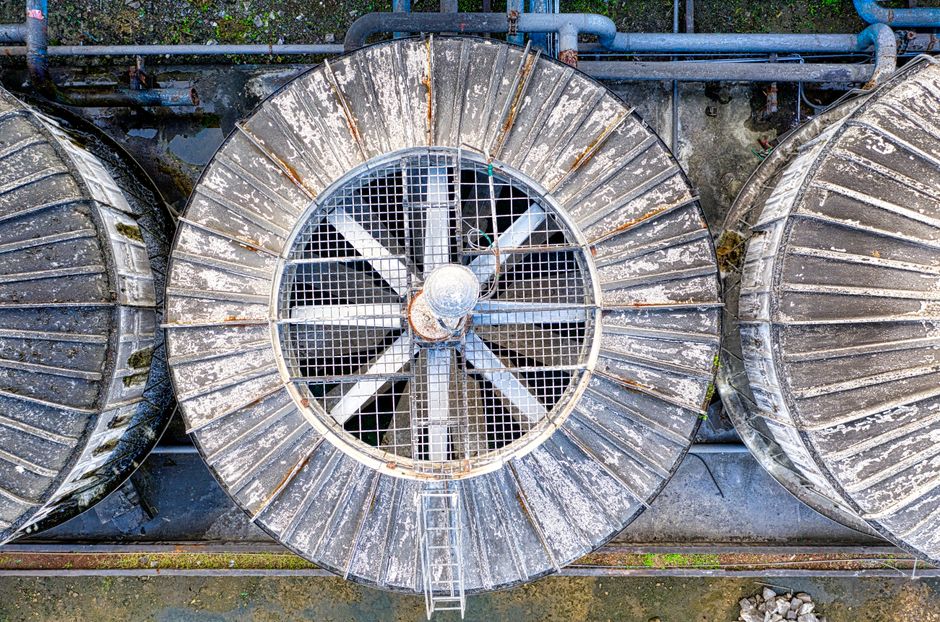
The implementation of AI-Driven Predictive Maintenance systems has produced statistically significant performance improvements across multiple operational metrics. Analysis of deployment data from over 200 industrial facilities reveals that organizations achieve an average 25-30% reduction in maintenance costs within the first 18 months of implementation. More importantly, unplanned downtime—the most costly disruption in manufacturing operations—decreases by an average of 35-50% as predictive algorithms identify failure modes 2-4 weeks before critical breakdowns occur. These figures represent not marginal improvements but transformative changes in how maintenance organizations allocate resources and manage risk.
Quantifying the Impact on Mean Time Between Failures
One of the most compelling statistical indicators of AI-driven predictive maintenance effectiveness is its impact on MTBF across critical production assets. Longitudinal studies tracking equipment performance in heavy industrial environments show that facilities implementing predictive analytics experience a 40-60% improvement in MTBF for rotating equipment such as pumps, compressors, and turbines. This improvement stems from the technology's ability to detect subtle degradation patterns—vibration anomalies, thermal variations, and performance drift—that precede catastrophic failures by weeks or months.
Consider the data from a major turbomachinery operation that deployed vibration analysis and thermal imaging integrated with machine learning models. Prior to implementation, their critical gas turbines averaged an MTBF of 4,200 operating hours. Within 24 months of deploying AI-driven condition monitoring, that figure increased to 6,800 hours—a 62% improvement. The financial impact was substantial: each unplanned turbine shutdown previously cost approximately $850,000 in lost production and emergency repairs. By extending MTBF and converting unplanned events to scheduled maintenance windows, the operation reduced annual failure-related costs by $12.4 million while improving asset utilization rates from 73% to 89%.
MTTR Reduction Through Intelligent Diagnostics
Beyond preventing failures, AI-driven predictive maintenance significantly reduces MTTR when equipment issues do occur. Traditional troubleshooting relies heavily on technician experience and manual diagnostics, often requiring 4-8 hours to identify root causes for complex equipment failures. Machine learning models trained on historical failure data and sensor patterns can diagnose issues within minutes, providing maintenance teams with specific fault identification and recommended corrective actions before technicians even arrive at the asset location.
Statistical analysis of maintenance work orders from facilities using AI diagnostics shows an average 45% reduction in MTTR compared to conventional approaches. For a mid-sized manufacturing operation with 200 production-critical assets, this translates to approximately 1,200 hours of reduced downtime annually. At an average production value of $15,000 per hour, the MTTR improvement alone generates $18 million in preserved production capacity. Additionally, faster diagnostics reduce emergency overtime labor costs by 30-40% and decrease the frequency of incorrect part orders—a common issue when technicians misdiagnose failure modes under time pressure.
Optimizing Maintenance Spend Through Predictive Analytics
Financial data from industrial operations reveals that AI-driven predictive maintenance fundamentally changes maintenance budget allocation and overall spend efficiency. Traditional preventive maintenance programs typically allocate 60-70% of maintenance budgets to scheduled activities regardless of actual equipment condition, resulting in unnecessary part replacements and premature overhauls. Predictive approaches shift resources toward condition-based interventions, reducing preventive maintenance spending by 20-35% while simultaneously decreasing reactive emergency repairs by 40-55%.
Organizations seeking to develop comprehensive AI solution frameworks for their maintenance operations find that the technology enables granular analysis of maintenance cost drivers across asset classes. One diversified industrial manufacturer analyzed three years of maintenance expenditure data after implementing predictive analytics and discovered that 23% of their preventive maintenance activities provided no measurable benefit to equipment reliability. By reallocating those resources to predictive monitoring and condition-based interventions, they reduced total maintenance costs from 4.2% of asset replacement value to 2.8%—a $6.7 million annual savings across their asset base of $240 million.
Inventory Optimization and Spare Parts Management
Predictive maintenance generates secondary financial benefits through improved inventory management for critical spare parts. Traditional approaches require substantial safety stock to ensure parts availability for unexpected failures, tying up working capital in slow-moving inventory. When failure predictions provide 2-4 weeks advance notice, organizations can reduce safety stock levels by 30-50% while actually improving parts availability for planned maintenance activities.
A heavy equipment manufacturer analyzed their spare parts inventory before and after predictive maintenance implementation. Their pre-implementation inventory carrying cost was $8.2 million annually, with a 12% stock-out rate for critical components during emergency failures. After deploying predictive analytics with 3-week failure forecasting, they reduced inventory carrying costs to $5.1 million while improving parts availability to 97%. The combination of reduced working capital requirements and improved maintenance execution efficiency generated a total financial impact of $4.8 million annually.
Performance Benchmarking Across Asset Classes
Statistical analysis of AI-driven predictive maintenance performance reveals significant variation across different equipment types, providing valuable insights for implementation prioritization. Rotating equipment with continuous operational profiles—pumps, motors, compressors, and fans—shows the highest prediction accuracy rates, typically 85-92% for failures occurring within a 30-day forecast window. This high accuracy stems from the consistent operational data these assets generate and the well-understood physics of failure for rotating machinery.
Heat exchangers and pressure vessels present greater predictive challenges due to their static nature and the complex corrosion and fouling mechanisms that drive failures. Prediction accuracy for these assets typically ranges from 65-75%, still substantially better than time-based maintenance but requiring more sophisticated sensing and modeling approaches. Electronic control systems and instrumentation occupy a middle ground, with prediction accuracies of 70-80% depending on the failure modes being monitored.
Understanding these accuracy variations is critical for realistic ROI projections and implementation planning. Organizations that prioritize high-value rotating equipment for initial deployments typically achieve breakeven on their AI-driven predictive maintenance investments within 14-18 months, while those taking a broader asset approach may require 24-30 months to achieve equivalent returns. The key is matching prediction technology capabilities to asset criticality and failure cost profiles rather than pursuing universal deployment without strategic prioritization.
OEE Improvements and Production Capacity Gains
The ultimate measure of maintenance effectiveness is its impact on OEE—the comprehensive metric combining availability, performance, and quality factors. AI-driven predictive maintenance influences all three OEE components, but its most dramatic impact appears in availability improvements. Manufacturing operations typically operate at 60-75% OEE, with unplanned downtime representing the largest improvement opportunity. Facilities implementing comprehensive predictive maintenance programs report OEE increases of 8-15 percentage points within 18-24 months, representing substantial production capacity gains without capital investment in new equipment.
A automotive components manufacturer with $420 million in annual revenue operated at 67% OEE prior to implementing AI-driven predictive maintenance across their critical production lines. Analysis of their operational data showed that unplanned equipment failures accounted for 18% of total production time losses. After deploying vibration analysis, thermal monitoring, and lubricant condition monitoring integrated with machine learning prediction models, their OEE increased to 79% over 20 months. This 12-percentage-point improvement translated to $48 million in additional production capacity utilizing existing assets—equivalent to avoiding a $35 million capital investment in new production equipment.
Statistical Confidence and Prediction Reliability
For maintenance directors evaluating AI-driven predictive maintenance technologies, understanding prediction confidence levels and false positive rates is essential for operational planning. Most commercial predictive maintenance systems operate with prediction confidence thresholds of 75-85%, meaning they generate alerts when algorithms calculate a 75-85% probability of failure within the specified time window. This threshold represents a balance between catching genuine developing failures and avoiding excessive false alarms that undermine user confidence and waste maintenance resources.
Field data from industrial deployments indicates that systems configured at 80% confidence thresholds typically experience false positive rates of 15-25%, depending on asset type and operational variability. While these false positives do consume diagnostic resources, their cost is substantially lower than missed predictions or the alternative of traditional time-based maintenance. Organizations that track both false positive costs and avoided failure costs consistently find that the net financial benefit remains strongly positive even with false positive rates approaching 30%.
Long-Term Performance Trends and Continuous Improvement
One of the most significant statistical findings from multi-year AI-driven predictive maintenance deployments is the continuous improvement in prediction accuracy as systems accumulate operational data and failure histories. Initial deployment prediction accuracy typically ranges from 70-75% in the first 6-12 months as algorithms work with limited failure data. However, as systems observe actual failure events and outcomes, machine learning models refine their parameters and prediction accuracy improves to 85-92% by year three of operation.
This learning curve has important implications for ROI calculations and implementation expectations. Organizations should model conservative performance assumptions for the first 12-18 months while anticipating accelerating benefits as prediction accuracy improves. A process manufacturing operation tracked their predictive maintenance performance over four years and found that their year-one savings of $2.1 million grew to $4.8 million by year three, despite no expansion in the number of monitored assets. The improvement came entirely from better prediction accuracy, reduced false positives, and more precise maintenance timing.
Conclusion
The statistical evidence supporting AI-driven predictive maintenance is comprehensive and compelling across multiple performance dimensions. Organizations implementing these technologies document 25-30% maintenance cost reductions, 35-50% decreases in unplanned downtime, 40-60% MTBF improvements, and 8-15 percentage point OEE gains within 18-24 months of deployment. These are not marginal improvements but transformative changes in asset reliability and maintenance effectiveness. For maintenance and reliability professionals in industrial equipment manufacturing, the question is no longer whether to implement predictive analytics but how to prioritize deployment across asset portfolios and integrate these capabilities with broader AI Asset Management strategies. The data demonstrates that early adopters gain not only operational advantages but also establish the data foundations and organizational capabilities that compound over time, creating sustainable competitive advantages in operational efficiency and asset performance management.


Comments
Post a Comment