AI E-commerce Integration: Data-Driven Performance Metrics and ROI Analysis
The digital marketplace has witnessed a fundamental transformation as artificial intelligence reshapes how retailers operate online. Today's e-commerce leaders are not merely experimenting with AI—they are deploying it strategically across their entire operation, from demand forecasting to checkout optimization. The quantifiable impact of these implementations reveals a compelling narrative: businesses that embrace AI-driven methodologies are outperforming their competitors across virtually every meaningful metric, from conversion rates to customer lifetime value. Understanding the statistical evidence behind these gains provides essential insights for any retailer navigating the increasingly competitive online landscape.
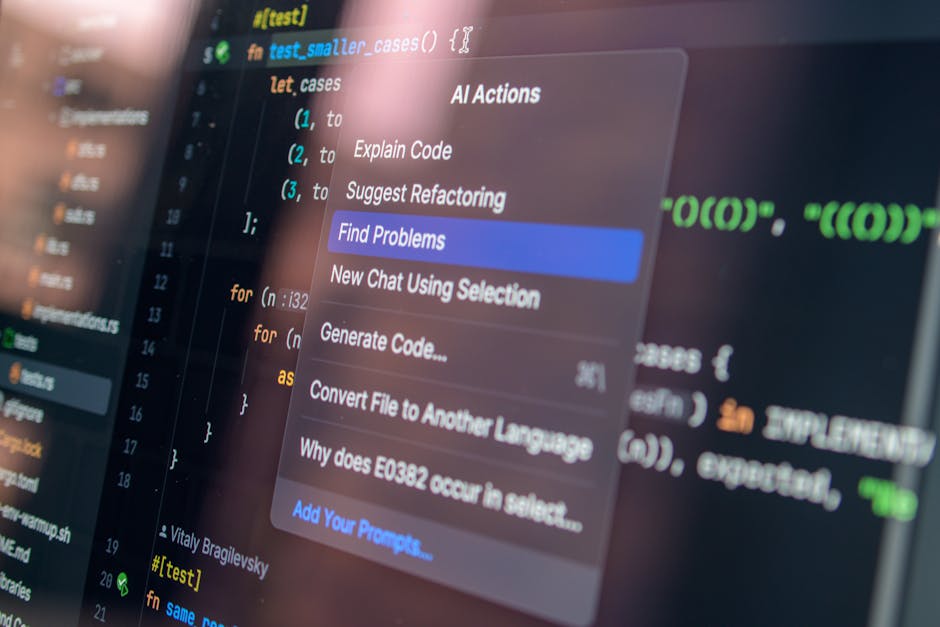
The measurable benefits of AI E-commerce Integration extend far beyond incremental improvements, representing transformative shifts in operational performance. Recent industry analysis demonstrates that retailers implementing comprehensive AI strategies report average conversion rate improvements of 25-35%, with some organizations achieving gains exceeding 50% in specific customer segments. These numbers reflect AI's ability to optimize every touchpoint in the customer journey, from initial product discovery through final purchase confirmation. The statistical evidence becomes even more compelling when examining average order value metrics, where AI-driven personalization engines consistently drive 15-30% increases by surfacing contextually relevant product recommendations and dynamic bundling strategies.
Quantifying the Impact of AI Personalization Engines on Revenue Performance
When examining the financial implications of AI E-commerce Integration, personalization capabilities emerge as the most statistically significant driver of revenue growth. Organizations deploying sophisticated AI Personalization Engine technology report that 30-40% of their total revenue now originates from algorithm-driven recommendations, a figure that would have seemed implausible just five years ago. This dramatic shift reflects AI's superior ability to analyze first-party data and predict individual customer preferences with remarkable accuracy.
The statistical breakdown reveals nuanced patterns across different implementation approaches. Retailers utilizing collaborative filtering algorithms combined with deep learning models achieve recommendation acceptance rates of 15-25%, compared to 3-8% for traditional rule-based systems. More importantly, customers who engage with AI-generated recommendations demonstrate 60-80% higher customer lifetime value compared to those who navigate sites without personalized guidance. These customers typically complete 2.5 times more transactions annually and exhibit 40% lower churn rates, creating compounding value over multi-year periods.
The temporal dimension of personalization performance deserves particular attention. Real-time personalization systems that adjust product recommendations within milliseconds based on current browsing behavior outperform batch-processing approaches by 12-18 percentage points in conversion rate optimization. This differential becomes especially pronounced during high-traffic periods, when the ability to serve contextually relevant content at scale separates market leaders from followers. Organizations investing in infrastructure capable of processing thousands of personalization decisions per second report return on advertising spend improvements of 25-40%, as each marketing dollar drives significantly higher engagement.
Demand Forecasting AI: Statistical Improvements in Inventory Management
The operational side of AI E-commerce Integration yields equally impressive quantitative results, particularly within inventory management functions. Traditional demand forecasting methods typically achieve 60-70% accuracy rates when predicting SKU-level demand 30 days forward, leading to chronic overstocking or stockouts that erode profitability. In contrast, organizations implementing Demand Forecasting AI systems report accuracy improvements to 85-92% for equivalent forecasting horizons, with some achieving 95%+ accuracy for high-volume SKUs.
These accuracy gains translate directly into financial performance. Retailers utilizing AI-driven inventory optimization reduce carrying costs by 20-35% while simultaneously decreasing stockout incidents by 40-60%. The dual benefit creates significant margin expansion—one major marketplace operator reported that AI-driven inventory management contributed 180 basis points of gross margin improvement over an 18-month implementation period. The system's ability to account for hundreds of demand signals simultaneously, from weather patterns to social media trends, enables far more nuanced stocking decisions than human planners could achieve manually.
The impact on working capital efficiency deserves emphasis. E-commerce operations implementing predictive inventory systems reduce inventory turnover periods by an average of 8-15 days, freeing substantial capital for reinvestment in growth initiatives. For organizations operating on thin margins, this working capital improvement can be transformative. When combined with AI-optimized order fulfillment routing that reduces per-unit shipping costs by 12-18%, the cumulative operational improvements can increase EBITDA margins by 200-400 basis points—a material difference in competitive positioning.
Customer Journey Optimization: Conversion Funnel Statistics
Analyzing AI E-commerce Integration through the lens of customer journey mapping reveals statistical improvements at every stage of the conversion funnel. Initial traffic engagement metrics show that AI-powered product discovery interfaces increase time-on-site by 30-45% and page views per session by 25-40%, indicating higher customer engagement with content. These engagement improvements cascade through the funnel—higher engagement correlates strongly with increased add-to-cart rates, which show 18-28% improvements in AI-optimized environments.
Cart abandonment reduction represents one of the most statistically significant areas of AI impact. Baseline cart abandonment rates in e-commerce typically range from 65-75%, representing massive revenue leakage. Organizations implementing AI-driven cart abandonment strategies—including predictive intervention timing, personalized incentive optimization, and intelligent remarketing—reduce abandonment rates to 45-55%, effectively recovering 30-40% of previously lost transactions. Advanced implementations using custom AI solutions achieve even more impressive results by integrating multiple intervention strategies into a unified optimization framework.
Checkout optimization through AI contributes additional conversion improvements of 8-15%. Systems that dynamically adjust checkout flows based on customer segment, device type, and behavioral signals reduce friction at the critical final step. Payment method optimization alone—presenting customers with their most likely preferred payment option first—increases checkout completion by 5-9 percentage points. When combined with AI-powered fraud detection systems that reduce false declines by 40-60%, the cumulative effect substantially improves revenue capture.
Long-Term Performance: CLV and Retention Statistics
While immediate conversion metrics demonstrate compelling value, the long-term statistical impact of AI E-commerce Integration on customer lifetime value provides the most powerful business case. Retailers implementing comprehensive AI strategies report that CLV increases by 40-75% over three-year measurement periods compared to control groups receiving standard experiences. This improvement stems from multiple reinforcing factors: increased purchase frequency (up 25-35%), higher average order value (up 15-30%), and extended customer lifecycle duration (up 30-50%).
Customer Journey Optimization powered by AI creates self-reinforcing engagement cycles. Each interaction generates data that improves future personalization, which drives higher satisfaction, leading to increased engagement, creating more data in a virtuous cycle. Organizations measuring Net Promoter Scores report improvements of 12-20 points following AI implementation, with particularly strong gains among high-value customer segments. These satisfaction improvements translate directly into retention—AI-enabled retailers typically achieve 85-90% annual retention rates for their top quartile customers, compared to 70-80% for traditional approaches.
The cohort analysis reveals instructive patterns. Customers acquired after AI implementation demonstrate 30-40% higher lifetime value compared to pre-AI cohorts, suggesting that AI-optimized acquisition strategies attract inherently more valuable customers while simultaneously providing superior experiences that maximize their value realization. This dual effect creates accelerating returns as AI-acquired customer bases mature, with Year 3 cohort performance typically 50-70% stronger than Year 1 cohorts measured at equivalent lifecycle stages.
Operational Efficiency Metrics and Cost Reduction
Beyond revenue enhancement, AI E-commerce Integration drives substantial cost efficiencies that improve overall profitability. Customer service operations utilizing AI-powered chatbots and automated response systems reduce per-contact costs by 40-60% while maintaining or improving customer satisfaction scores. These systems now handle 60-75% of routine inquiries without human intervention, allowing customer service teams to focus on complex issues requiring human judgment and empathy.
Digital merchandising workflows demonstrate similar efficiency gains. AI systems that automatically optimize product catalog organization, pricing strategies, and promotional timing reduce merchandising labor costs by 30-50% while achieving superior performance outcomes. One major online retailer reported that AI-driven dynamic pricing strategies increased margin by 3-7% across different product categories while simultaneously improving price competitiveness scores, a combination nearly impossible to achieve through manual pricing approaches.
Return merchandise authorization processes benefit significantly from AI integration. Predictive models that identify high-return-risk products before purchase enable proactive interventions—enhanced product descriptions, size recommendations, and fit guidance—that reduce return rates by 15-30%. Given that returns typically cost retailers 15-30% of the original order value when accounting for reverse logistics, restocking, and product devaluation, these reductions create substantial margin improvements. Organizations implementing comprehensive return optimization strategies report that return-related costs decline from 5-8% of revenue to 3-5%, a difference that directly enhances profitability.
Competitive Performance Differential
Perhaps the most compelling statistical evidence for AI E-commerce Integration comes from comparative performance analysis between AI-adopters and traditional retailers. Organizations in the top quartile of AI implementation maturity grow revenue 2.5-3.5 times faster than bottom quartile performers, a gap that widens annually. Market share data shows systematic share gain by AI leaders, with top performers capturing 15-25 percentage points of share from laggards over three-year periods in competitive categories.
The performance gap extends beyond growth rates to profitability metrics. AI-mature retailers operate with EBITDA margins 400-700 basis points higher than traditional competitors, reflecting both revenue optimization and operational efficiency advantages. This margin differential creates strategic flexibility—the ability to invest more aggressively in customer acquisition, technology development, or market expansion while maintaining superior profitability. The compounding effect of these advantages creates widening competitive moats that become increasingly difficult to overcome.
Customer acquisition cost statistics reveal another dimension of competitive advantage. While traditional retailers face steadily increasing CAC—up 30-50% over the past three years across most categories—AI-enabled organizations have maintained or reduced acquisition costs through superior targeting precision and conversion optimization. This differential creates a powerful strategic advantage: AI adopters can profitably serve customer segments that traditional competitors cannot economically address, enabling market expansion into previously unviable niches.
Implementation ROI and Payback Period Analysis
Financial decision-makers evaluating AI E-commerce Integration investments naturally focus on return on investment and payback period metrics. Industry data suggests that comprehensive AI implementations typically require 12-24 months to achieve positive ROI, with payback periods ranging from 18-36 months depending on implementation scope and organizational maturity. While these timelines may seem extended, the magnitude of returns justifies the investment—organizations achieving full implementation maturity report 300-500% ROI over five-year measurement periods.
The investment requirements vary significantly based on existing infrastructure and implementation approach. Organizations building capabilities in-house typically invest $2-5 million for mid-market implementations and $10-30 million for enterprise-scale deployments. These figures include technology infrastructure, data engineering, algorithm development, and organizational change management. Alternative approaches leveraging platform solutions and external expertise can reduce upfront capital requirements by 40-60%, accelerating time-to-value while maintaining performance outcomes.
The phased implementation approach adopted by successful organizations enables progressive value capture that funds subsequent expansion. Initial deployments focusing on high-impact, lower-complexity use cases—such as personalized product recommendations—typically achieve payback within 8-12 months, generating cash flow that finances more complex capabilities like demand forecasting or dynamic pricing. This sequencing strategy reduces financial risk while building organizational competence and stakeholder confidence.
Conclusion
The statistical evidence supporting AI E-commerce Integration is overwhelming and continues strengthening as implementations mature and methodologies evolve. Organizations achieving comprehensive integration across personalization, forecasting, optimization, and operational functions report transformative performance improvements: 25-35% conversion rate gains, 40-75% CLV increases, 20-35% cost reductions, and 400-700 basis point margin expansions. These are not marginal improvements but fundamental competitive repositioning that separates market leaders from followers in the increasingly demanding digital marketplace. For retailers serious about competing effectively in 2026 and beyond, exploring comprehensive E-commerce AI Solutions has transitioned from competitive advantage to competitive necessity, with the performance data making clear that delayed adoption creates compounding disadvantages that become progressively more difficult to overcome.


Comments
Post a Comment