Debunking 12 Persistent Myths About Production Line Automation
Despite widespread adoption across manufacturing sectors, misconceptions about Production Line Automation continue to influence strategic decisions and investment priorities. These myths—ranging from outdated beliefs about implementation costs to misunderstandings about workforce impacts—create hesitation among manufacturers considering automation initiatives or lead to poorly designed implementations that fail to deliver anticipated benefits. As facilities struggle with rising labor costs, quality consistency challenges, and pressure to reduce cycle times, separating fact from fiction becomes essential for making informed technology investments that genuinely improve operational performance rather than creating expensive complexities that undermine competitiveness.
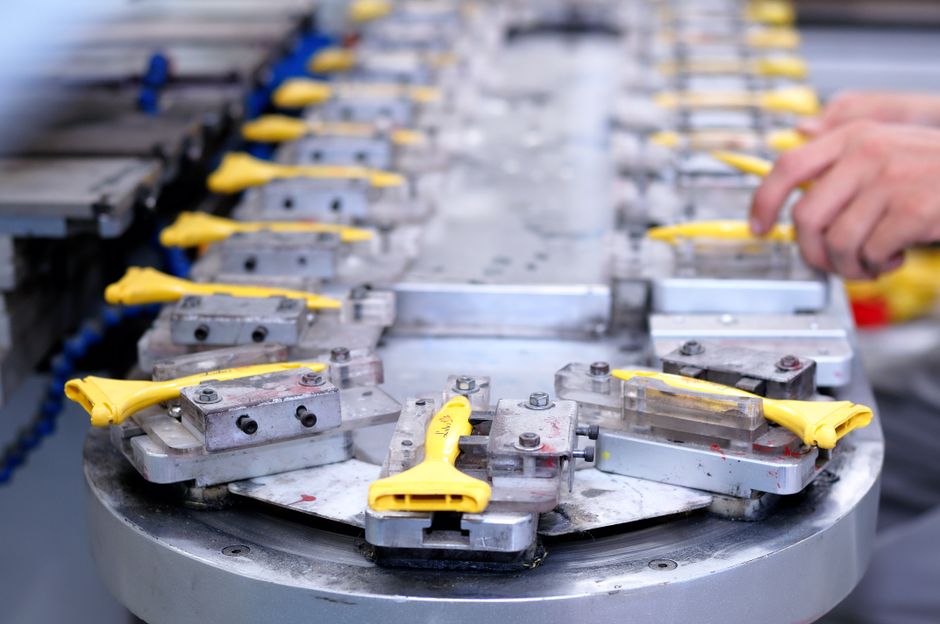
Drawing on implementation data from facilities operated by ABB, Fanuc, and similar manufacturers who have deployed comprehensive Production Line Automation across diverse production environments, we can examine the evidence contradicting common misconceptions. Real-world performance metrics, total cost of ownership analyses, and workforce impact studies provide objective insights that challenge assumptions persisting from earlier automation generations. Understanding these realities enables manufacturers to approach automation strategically with appropriate expectations and implementation approaches that maximize value creation.
Myth 1: Automation Only Makes Sense for High-Volume Production
The belief that Production Line Automation requires massive production volumes to justify investment costs reflects outdated assumptions from hard-tooled automation eras. Modern flexible automation architectures built around collaborative robots, modular workstations, and adaptive control systems achieve economic viability at production volumes as low as several hundred units annually. The key economic driver shifts from amortizing fixed tooling costs across enormous production runs to achieving consistent quality, reduced cycle times, and elimination of ergonomic challenges that create turnover costs and workers' compensation claims in manual operations.
Manufacturers producing specialized industrial equipment, custom medical devices, and aerospace components successfully implement automation despite production volumes measured in hundreds or low thousands of units per year. Robotic systems with vision guidance adapt to part variations without custom fixturing, while programming interfaces based on demonstration learning rather than traditional coding enable rapid changeovers between product variants. These capabilities make automation economically attractive even for job-shop environments previously considered unsuitable for anything beyond manual operations.
Myth 2: Automation Eliminates the Need for Skilled Workers
Perhaps no myth proves more persistent or more damaging than the notion that automation replaces human expertise with machines requiring minimal operator skill. Reality demonstrates the opposite—effective Production Line Automation increases demand for skilled workers who understand both mechanical systems and digital technologies. Operators must interpret real-time data displays, recognize abnormal patterns indicating developing problems, perform complex troubleshooting when automated systems encounter unexpected conditions, and continuously identify improvement opportunities based on operational experience.
Companies implementing comprehensive automation report shifting workforce composition toward higher-skilled roles rather than reducing overall employment levels. While repetitive manual tasks decrease, positions in maintenance, programming, process engineering, and quality analytics expand. Facilities investing in structured training programs that develop existing employees' technical capabilities see stronger automation performance than those attempting to operate advanced systems with undertrained personnel. The economic return from automation depends critically on human expertise to maintain, optimize, and continuously improve automated processes.
Myth 3: Automated Systems Are Too Rigid for Product Variety
Critics frequently argue that automation sacrifices flexibility for efficiency, creating brittle production systems unable to accommodate product variations or design changes. This characterization accurately described dedicated transfer lines and hard automation from previous decades but misrepresents modern approaches. Smart factory integration incorporating machine learning algorithms, adaptive robotics, and software-defined production control enables rapid changeovers between product variants while maintaining high efficiency for each configuration.
Vision-guided robotic systems automatically adjust to different part geometries without mechanical changeover. Programmable tooling adapts to variant dimensions through servo-controlled adjustments taking seconds rather than the hours required for manual changeover of fixed tooling. Manufacturing execution systems store recipes for dozens of product variants, reconfiguring equipment parameters automatically when production schedules switch between different items. These capabilities enable economical production of diverse product portfolios that would be impractical with either purely manual operations or traditional hard automation approaches.
Myth 4: Implementation Always Requires Extended Production Shutdowns
Concerns about lengthy production interruptions during automation installation discourage manufacturers from pursuing improvements despite clear performance gaps. While comprehensive facility-wide implementations do require scheduled downtime, phased deployment strategies enable incremental automation adoption with minimal production disruption. Manufacturers install automated cells for specific production stages during normal production gaps, validating performance before expanding scope to additional operations.
Modular automation architectures facilitate this incremental approach by operating standalone initially, then integrating with adjacent process steps as implementations progress. Parallel validation strategies operate new automated systems alongside existing manual processes until performance reliability is confirmed, eliminating risks of production shortfalls during transition periods. Careful project planning coordinates equipment installation during scheduled maintenance shutdowns or seasonal production lulls, minimizing impact on delivery commitments. Most facilities implementing Production Line Automation through phased approaches report less than five percent reduction in annual production output during multi-year transformation programs.
Myth 5: ROI Calculations Only Consider Direct Labor Savings
Simplistic return-on-investment analyses focusing exclusively on direct labor cost reduction dramatically undervalue automation benefits while potentially leading to poor investment decisions. Comprehensive financial analyses incorporate quality improvements reducing scrap rates and rework costs, throughput increases from reduced cycle times enabling revenue growth without facility expansion, inventory reductions from improved process reliability, reduced workers' compensation costs from eliminating ergonomically challenging tasks, and improved customer satisfaction from consistent quality and delivery performance.
Many successful automation implementations achieve positive returns despite minimal direct labor savings. A Rockwell Automation case study documented a specialty chemical manufacturer justifying significant automation investment entirely through quality consistency improvements that reduced customer returns and enabled premium pricing for guaranteed specifications. Another facility producing precision mechanical assemblies justified robotic automation based on eliminating quality escapes that previously generated warranty claims costing far more than the labor savings from automated assembly. Narrow focus on labor displacement misses the majority of value creation from well-designed automation strategies.
Myth 6: Predictive Maintenance Is Just Preventive Maintenance with Sensors
Surface-level understanding leads many to view predictive maintenance as simply more frequent condition monitoring rather than recognizing the fundamental paradigm shift from scheduled interventions to data-driven timing. Preventive maintenance performs service at fixed intervals regardless of actual equipment condition, resulting in unnecessary maintenance during some cycles and late maintenance during others. Predictive maintenance analyzes continuously monitored equipment health indicators to identify degradation patterns, scheduling interventions based on actual condition rather than arbitrary intervals.
Machine learning models processing vibration signatures, thermal patterns, lubricant analysis results, and electrical characteristics detect subtle changes indicating developing problems weeks before functional failures occur. This advance warning enables maintenance during planned production gaps rather than emergency responses during scheduled production time. The economic impact extends beyond avoiding unplanned downtime—condition-based maintenance optimizes component replacement timing, avoiding both premature replacement of serviceable parts and catastrophic failures from delayed service. Facilities implementing genuine predictive analytics report 35-50 percent reductions in maintenance costs compared to preventive approaches while simultaneously improving equipment availability.
Myth 7: Cybersecurity Risks Make Industrial Networks Too Vulnerable
High-profile reports of industrial control system vulnerabilities create perceptions that connecting production equipment to enterprise networks invites catastrophic cyber attacks. While cybersecurity requires serious attention, properly architected industrial networks achieve excellent security through defense-in-depth strategies including network segmentation, encrypted communications, multi-factor authentication, and continuous threat monitoring. The notion that secure industrial automation is impossible or prohibitively expensive reflects inadequate security design rather than inherent technology limitations.
Manufacturing facilities across regulated industries including pharmaceuticals, aerospace, and food production successfully operate connected production systems while meeting stringent cybersecurity requirements. Security architectures isolate critical production control networks from corporate IT systems and internet connections through industrial firewalls and demilitarized zones. Secure remote access solutions enable vendor support and off-site monitoring without creating vulnerabilities. Regular security assessments and penetration testing validate protective measures and identify emerging risks. Organizations leveraging sophisticated AI development frameworks incorporate security requirements throughout system design rather than treating cybersecurity as an afterthought, creating robust protections without compromising functionality.
Myth 8: Digital Twins Are Only for Large Enterprises with Huge IT Budgets
Digital twin technology often appears in discussions of advanced manufacturing alongside multinational corporations and massive research budgets, creating impressions that these capabilities remain inaccessible to mid-sized manufacturers. Modern simulation platforms and cloud-based computing resources have democratized digital twin development, enabling facilities with limited IT staff to create useful models of their production processes. Pre-built component libraries for common equipment types reduce custom modeling requirements, while subscription-based software licensing eliminates large upfront capital investments.
Mid-sized manufacturers successfully deploy focused digital twins addressing specific optimization opportunities rather than attempting comprehensive facility-wide models. A machine shop might model a critical CNC machining cell to optimize tool paths and identify bottlenecks without modeling every production area. An assembly operation might create a digital twin of a complex multi-station process to evaluate scheduling strategies without modeling simple sub-assembly areas. These targeted applications deliver meaningful returns while remaining within practical resource constraints for smaller organizations.
Myth 9: Production Line Automation Requires Replacing All Existing Equipment
The assumption that automation demands wholesale replacement of existing production equipment creates perceived barriers that discourage improvement initiatives. Reality demonstrates that retrofit automation—adding sensors, vision systems, robotic material handling, and advanced controls to existing machinery—delivers substantial benefits while preserving functional equipment investments. Many production machines have mechanical lifespans measured in decades but lack modern sensing, connectivity, and control capabilities that enable integration into smart factory architectures.
Retrofit approaches install IIoT sensor packages that monitor equipment health and production parameters, connecting legacy machines to manufacturing execution systems without modifying core mechanical components. Collaborative robots handle material loading and unloading for machines originally designed for manual operation. Vision inspection systems add quality verification to production stages previously relying on sampling approaches. These incremental enhancements create integrated Production Line Automation without the disruption and expense of replacing functional equipment. Phased modernization strategies prioritize retrofit investments based on impact potential, systematically building automation capabilities within practical budget constraints.
Myth 10: AI and Machine Learning Are Too Complex for Manufacturing Applications
Perceptions that artificial intelligence requires PhD-level data scientists and months of algorithm development create hesitation about deploying machine learning in production environments. Modern AI platforms designed specifically for industrial applications provide pre-trained models for common manufacturing challenges like quality inspection, predictive maintenance, and process optimization. User-friendly interfaces enable process engineers without programming backgrounds to configure models using production data, train algorithms through supervised learning approaches, and deploy solutions into production systems.
Manufacturing-focused AI platforms incorporate domain knowledge about common production processes, equipment behavior, and quality requirements, reducing the custom development necessary for effective implementations. Transfer learning techniques allow models trained on data from similar processes at other facilities to be fine-tuned with limited local data, accelerating deployment timelines. Cloud-based AI services provide scalable computing resources for model training without requiring on-premises infrastructure investments. These accessible approaches put machine learning capabilities within reach of manufacturers previously assuming AI remained limited to technology companies and research institutions.
Myth 11: Automated Quality Inspection Catches Fewer Defects Than Human Inspectors
Concerns about automated quality control missing subtle defects that experienced human inspectors would detect reflect outdated experience with early vision systems. Modern machine vision incorporating deep learning algorithms matches or exceeds human inspection accuracy across most quality parameters while delivering 100 percent inspection coverage at production speeds impossible for manual approaches. Neural networks trained on millions of part images learn to distinguish genuine defects from acceptable variations in surface appearance, dimensional characteristics, and assembly completeness.
Controlled studies comparing automated and manual inspection performance consistently demonstrate higher defect detection rates for vision systems, particularly for subtle flaws like small surface scratches, minor dimensional variations, and component placement accuracy. Human inspectors experience fatigue, distraction, and subjective judgment variations that create inspection inconsistency, while automated systems apply identical criteria to every inspected item. The economic impact extends beyond catch rates—comprehensive automated inspection provides quality data for every produced unit, enabling root cause analysis and continuous process improvement impossible with sampling-based manual approaches.
Myth 12: Success Depends Primarily on Technology Selection
Excessive focus on specific equipment vendors, software platforms, and technology specifications distracts from more critical success factors around implementation approach, organizational change management, and workforce engagement. Numerous manufacturing facilities deploy technically capable automation systems that fail to deliver anticipated benefits due to inadequate operator training, poor integration with existing processes, lack of clear performance metrics, or insufficient management commitment to optimization and continuous improvement.
Successful automation programs emphasize cross-functional collaboration between production, maintenance, quality, IT, and engineering teams throughout planning and implementation. Structured approaches identify clear business objectives, establish baseline performance metrics, and define specific targets for improvement. Comprehensive training programs develop workforce capabilities to operate, maintain, and optimize new systems. Regular review processes track performance against targets and implement corrective actions when results fall short of expectations. These organizational and process factors determine whether technically sound automation investments deliver transformational improvements or become underutilized capital expenditures that fail to generate promised returns.
Conclusion: Evidence-Based Automation Strategies Drive Manufacturing Excellence
The twelve myths examined above demonstrate how misconceptions rooted in outdated experience or incomplete understanding create barriers to effective Production Line Automation adoption. Manufacturers who critically examine these assumptions using current evidence—including performance data from diverse implementations, total cost analyses incorporating all benefit categories, and workforce impact studies tracking actual employment changes—develop more realistic expectations and more effective implementation strategies. The evidence clearly shows that modern automation delivers value across production volumes from job shops to mass production, increases rather than eliminates demand for skilled workers, provides flexibility for product variety through adaptive technologies like robotic process automation and smart factory integration, achieves positive returns through benefits extending far beyond direct labor savings, and succeeds or fails based primarily on implementation approach rather than specific technology choices. As manufacturing facilities face intensifying competitive pressures around quality, cost, and delivery performance, adopting comprehensive Intelligent Automation Solutions grounded in accurate understanding rather than persistent myths provides the foundation for sustained operational excellence and market leadership in industries where marginal performance differences determine long-term viability.


Comments
Post a Comment